
NEW DELHI: The Union Cabinet Secretariat has declined to initiate administrative action on separate complaints filed by two serving election commissioners against a senior Election Commission of India (ECI) official, according to documents obtained under the Right to Information (RTI) Act.
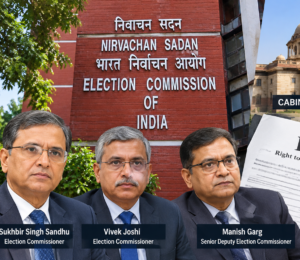
The development came to light following an RTI application filed by retired Commodore Lokesh K Batra. Election commissioners Sukhbir Singh Sandhu and Vivek Joshi had written separate letters to Cabinet Secretary TV Somanathan on July 29, raising serious concerns over the functioning of senior deputy election commissioner Manish Garg.
Allegations of unilateral redistribution of responsibilities
The two commissioners alleged that Garg, a senior IAS officer, had unilaterally reallocated responsibilities among senior deputy election commissioners and director-general-level officials without prior consultation with the concerned commissioners or discussion at a full Commission meeting.
According to the complaints, Garg had allegedly disregarded repeated oral and written instructions that such administrative changes should not be made without the Commission’s approval.
Joshi also alleged that officials in the administration division had refused to provide relevant files when they were sought for examination. Both commissioners reportedly argued that the actions were inconsistent with the provisions of the Chief Election Commissioner and Other Election Commissioners Act, 2023.
Why the Cabinet Secretariat declined action
According to the RTI documents, the Cabinet Secretariat took the position that the complaints had been submitted by the two commissioners in their individual capacities and did not constitute an official communication from the full Election Commission, including the Chief Election Commissioner.
The Secretariat also cited the Election Commission’s constitutional independence, indicating that government intervention in its internal administrative matters could raise concerns about the institution’s autonomy.
Section 18 of the 2023 Act provides for decisions of the Commission to be taken by consensus or, where necessary, by majority. The complaints were reportedly forwarded to the Department of Personnel and Training (DoPT) for placement in the concerned officer’s personal records rather than for further administrative action.
Questions over internal resolution
Former election commissioner Ashok Lavasa and political analyst Yogendra Yadav reportedly questioned why the two commissioners approached the Cabinet Secretary instead of seeking to resolve the dispute within the Commission or exploring other constitutional avenues.
The controversy also centres on an order attributed to Garg that reportedly sought to centralise in the ECI headquarters in Delhi key responsibilities relating to the addition and deletion of names from electoral rolls, functions previously handled at the state level.
Following the controversy, the Election Commission clarified that the order reallocating responsibilities had been kept in abeyance and would not be implemented immediately, reportedly following directions from the two commissioners.
The episode has brought renewed attention to the Commission’s internal decision-making processes, administrative accountability and the balance between institutional autonomy and oversight.


