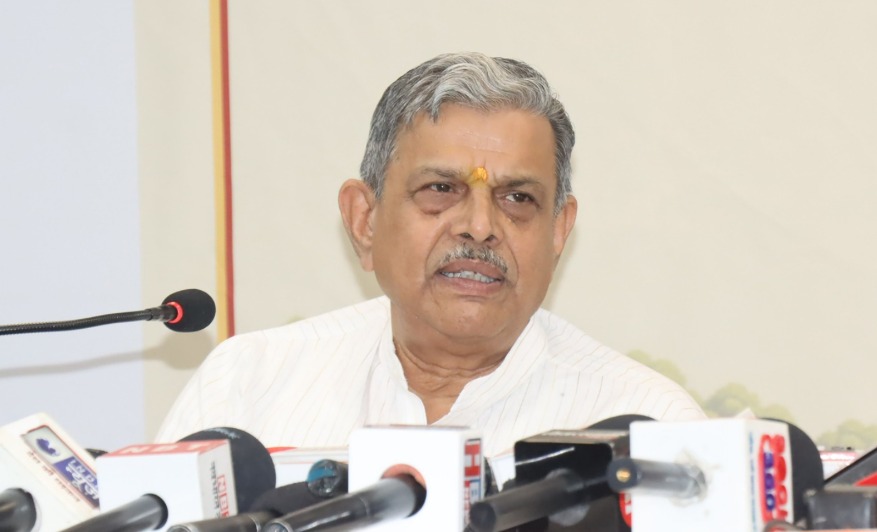
New Delhi: RSS Sarkaryavah Dattatreya Hosabale on Wednesday described 19th-century reformer and nationalist Rajnarayan Basu as a key figure in the emergence of national consciousness in India, paying tribute to him on his 200th birth anniversary.
In a statement, Hosabale said Basu worked to restore cultural pride and self-confidence among educated Indians at a time when British rule had distanced sections of society from their civilisational roots.
Born on December 7, 1826, in Boral village in Bengal’s South 24 Parganas district, Basu devoted his life to education and social reform. His initiatives included promoting women’s education, widow remarriage and the welfare of the poor, besides campaigning against intoxicant use. He also set an example by arranging the marriage of his brother to a widow.
Hosabale said Basu sought to build national pride among educated Indians and prepared a proposal titled Prospectus of a Society for Promotion of National Feeling to advance the cause.
His efforts helped strengthen the Hindu Mela, established by Nabagopal Mitra in 1867 as a platform for fostering national consciousness. Basu promoted indigenous products and the Swadeshi spirit through the initiative.
He also advocated the use of the mother tongue, viewing it as essential to self-respect and national identity. In 1873, he authored The Superiority of Hinduism, a work highlighting the philosophical traditions and cultural foundations of Hinduism.
Basu later outlined his vision for a Maha Hindu Samiti in the pamphlet Vridhaa Hindur Aasha (The Old Hindu’s Hope), published in the 1880s.
Hosabale noted that Basu was the maternal grandfather of Sri Aurobindo and that his nationalist ideas influenced the latter. Other prominent figures, including Rabindranath Tagore, Swami Vivekananda and Sister Nivedita, also held him in high regard, the statement said.
Paying homage to Basu, Hosabale said his emphasis on cultural roots, self-respect and national unity continued to hold relevance.